
This article identifies seven legal platforms where cybersecurity learners can practice hacking techniques on authorized vulnerable systems, addressing the critical need for hands-on practice environments that don't violate laws. The article explains why legal practice is essential—unauthorized hacking attempts are illegal and carry serious consequences—and maps platforms from beginner to advanced levels to help learners build careers in ethical hacking.
- Legal practice prevents serious legal consequencesThe article emphasizes that attempting hacking techniques on random websites is illegal and can lead to serious consequences. Legal platforms provide permission-based environments where users can safely test techniques without violating cybersecurity laws, making authorized practice essential for anyone learning ethical hacking.
- TryHackMe designed specifically for beginnersTryHackMe offers beginner-friendly cybersecurity training through guided hacking lessons and structured learning paths covering Pre Security, Complete Beginner, Web Hacking, and Offensive Pentesting. The platform teaches Linux basics, networking fundamentals, web vulnerabilities, and Metasploit exploitation in a step-by-step format.
- Hack The Box provides realistic penetration testingHack The Box offers realistic penetration testing scenarios with vulnerable Linux and Windows machines, Active Directory attack labs, and Capture The Flag challenges. It teaches network exploitation, web application hacking, privilege escalation, and reverse engineering, making it widely used by professional penetration testers.
- PortSwigger Academy specializes in web vulnerabilitiesDeveloped by the creators of Burp Suite, PortSwigger Web Security Academy teaches real-world web security vulnerabilities including SQL Injection, Cross-Site Scripting, authentication bypass, CSRF attacks, and server-side request forgery. It is specifically recommended for bug bounty hunters since these vulnerabilities frequently appear in bug bounty programs.
- OverTheWire teaches Linux fundamentals through BanditOverTheWire offers cybersecurity wargames with its most famous challenge, Bandit, which teaches Linux commands, SSH connections, file permissions, and password cracking. These foundational skills form the basis for ethical hacking practice.
- Root Me and PentesterLab cover specialized attack typesRoot Me provides hundreds of challenges across web hacking, cryptography, reverse engineering, network attacks, and forensics using a Capture The Flag format. PentesterLab focuses on web application penetration testing with labs covering SQL injection, authentication flaws, API vulnerabilities, remote code execution, and file upload attacks, with each lab explaining vulnerabilities before exploitation.
- DVWA provides locally installed practice environmentDamn Vulnerable Web Application is a vulnerable web application installed locally for practice, containing SQL Injection, Cross-site scripting, command injection, and file inclusion vulnerabilities. It is widely used in cybersecurity courses for hands-on practice.
- Skill progression from 6 to 12 months with consistencyThe article states that beginners who consistently practice on hacking labs and platforms can build strong ethical hacking skills within 6–12 months, with the recommended progression starting at beginner-friendly TryHackMe before advancing to intermediate and professional platforms like Hack The Box.
Bottom line: Legal practice platforms are essential for ethical hacking training, with TryHackMe recommended for beginners and platforms like Hack The Box and PortSwigger Academy for advanced users; consistent practice on these authorized environments enables learners to develop practical penetration testing skills while building careers in cybersecurity without legal risk.
Cybersecurity is one of the fastest-growing industries in the world. Every day, companies face thousands of cyberattacks targeting their systems, websites, and sensitive data. Because of these threats, organizations actively hire ethical hackers to find security vulnerabilities before criminals exploit them. One of my students asked a very basic question from me:
Websites where you can practice hacking legally? Is there any?
Trying hacking techniques on random websites is illegal and can lead to serious consequences. Ethical hacking should always be practiced in authorized environments.
Fortunately, several cybersecurity platforms allow you to practice hacking legally through simulated vulnerable systems and hacking labs.
These platforms are used by:
- Cybersecurity beginners
- Ethical hackers
- Penetration testers
- Bug bounty hunters
- Security researchers
- Legal practice sites give you permission in advance, which is the only thing that separates hacking practice from a crime.
- The seven covered here: Hack The Box, TryHackMe, PortSwigger Web Security Academy, OverTheWire, Root Me, PentesterLab and DVWA.
- Beginners do best with guided options (TryHackMe, PortSwigger Academy, OverTheWire); Hack The Box and Root Me reward working things out alone.
- Never practise on a real website, even a 'quick test'; a public bug bounty programme with a written scope is the next step after labs.
Table of Contents
Why Practicing Hacking Legally Is Important
Before exploring the list of websites where you can practice hacking legally, it is important to understand why legal practice environments exist.
Ethical hacking requires experimentation. Practicing on unauthorized systems is illegal. To understand ethical hacking better, first learn the types of hackers and how they operate in cybersecurity environments.
Legal hacking platforms provide permission-based environments where you can safely test hacking techniques without violating laws.
7 Websites Where You Can Practice Hacking Legally
In this guide, you will discover 7 powerful websites where you can practice hacking legally, improve your cybersecurity skills, and prepare for real-world penetration testing.
1. Hack The Box
One of the most popular websites where you can practice hacking legally is Hack The Box.

Hack The Box provides a realistic hacking environment where users attack vulnerable machines.
Key Features
- Realistic penetration testing scenarios
- Linux and Windows machines
- Active Directory attack labs
- Capture The Flag challenges
Skills You Will Learn
Hack The Box helps users develop skills in:
- Network exploitation
- Web application hacking
- Privilege escalation
- Reverse engineering
This platform is widely used by professional penetration testers.
2. TryHackMe
Another excellent platform among websites where you can practice hacking legally is TryHackMe.
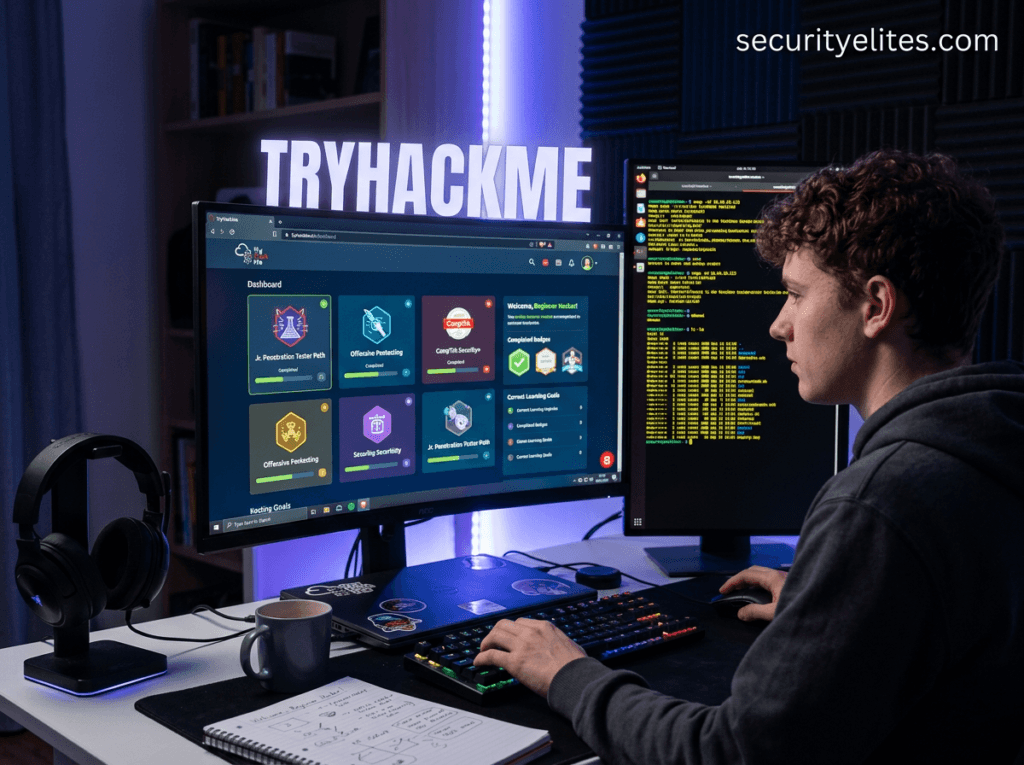
TryHackMe is especially designed for beginners. TryHackMe provides guided hacking lessons where users learn step by step.
Learning paths include:
- Pre Security
- Complete Beginner
- Web Hacking
- Offensive Pentesting
Skills You Will Learn
TryHackMe teaches:
- Linux basics
- Networking fundamentals
- Web vulnerabilities
- Metasploit exploitation
For beginners starting ethical hacking, this platform is highly recommended.
3. PortSwigger Web Security Academy
If your focus is web application security, then PortSwigger Web Security Academy is one of the best websites where you can practice hacking legally. This is one of the best online websites to practice for Bug Bounty Hunters.

This platform was developed by the creators of Burp Suite, a popular penetration testing tool.
Vulnerabilities You Can Practice
- SQL Injection
- Cross-Site Scripting
- Authentication bypass
- CSRF attacks
- Server-side request forgery
These vulnerabilities appear frequently in bug bounty programs.
4. OverTheWire
OverTheWire offers cybersecurity wargames designed to teach Linux and security fundamentals.
The most famous challenge on this platform is Bandit.
What Bandit Teaches
- Linux commands
- SSH connections
- File permissions
- Password cracking
These skills form the foundation of ethical hacking. Security professionals often use tools like ffuf during penetration testing.
5. Root Me
Another powerful option among websites where you can practice hacking legally is Root Me.
Root Me provides hundreds of cybersecurity challenges across multiple domains.
Categories Available
- Web hacking
- Cryptography
- Reverse engineering
- Network attacks
- Forensics
The platform uses a Capture The Flag (CTF) format where users exploit vulnerabilities to capture flags.
6. PentesterLab
PentesterLab focuses on web application penetration testing.
Each lab explains the vulnerability before allowing users to exploit it.
Topics Covered
- SQL injection
- Authentication flaws
- API vulnerabilities
- Remote code execution
- File upload attacks
PentesterLab is widely used for learning web hacking.
7. DVWA (Damn Vulnerable Web Application)
The final platform among websites where you can practice hacking legally is Damn Vulnerable Web Application.
DVWA is a vulnerable web application installed locally for practice.
Vulnerabilities Included
- SQL Injection
- Cross-site scripting
- Command injection
- File inclusion
DVWA is widely used in cybersecurity courses for hands-on practice.
Consistent practice on websites where you can practice hacking legally will significantly improve your cybersecurity skills.
Frequently Asked Questions About Websites Where You Can Practice Hacking Legally
What are the best websites where you can practice hacking legally?
Some of the best websites where you can practice hacking legally include Hack The Box, TryHackMe, PortSwigger Web Security Academy, Root Me, PentesterLab, OverTheWire, and Damn Vulnerable Web Application. These platforms provide safe environments where users can practice ethical hacking techniques.
Is it legal to practice hacking on these platforms?
Yes. These platforms are specifically designed for ethical hacking training. They provide vulnerable systems where users have permission to test hacking techniques legally without violating cybersecurity laws.
Which website is best for beginners learning ethical hacking?
For beginners, TryHackMe is considered one of the best platforms because it provides guided learning paths, step-by-step tutorials, and beginner-friendly cybersecurity labs.
Can practicing on hacking platforms help build a cybersecurity career?
Yes. Practicing on websites where you can practice hacking legally helps develop practical cybersecurity skills such as penetration testing, vulnerability assessment, and exploitation techniques, which are required for careers in ethical hacking and cybersecurity.
Do ethical hackers earn money legally?
Yes. Ethical hackers can earn money through bug bounty programs, cybersecurity consulting, and penetration testing jobs. Companies reward hackers for responsibly reporting vulnerabilities before attackers exploit them.
What skills should beginners learn before practicing hacking?
Before starting ethical hacking, beginners should understand:
- Linux operating system basics
- Networking fundamentals
- Web application security
- Basic programming concepts
- Cybersecurity tools used in penetration testing
Learning these skills helps beginners progress faster on hacking practice platforms.
Are hacking practice websites free to use?
Many websites where you can practice hacking legally offer free labs, while some advanced features require paid subscriptions. Platforms like PortSwigger Web Security Academy and OverTheWire provide completely free training.
How long does it take to learn ethical hacking?
Learning ethical hacking depends on dedication and practice. Beginners who consistently practice on hacking labs and cybersecurity platforms can build strong skills within 6–12 months.
Key Takeaways
Cybersecurity is one of the most exciting and fastest-growing industries today. But becoming a skilled ethical hacker requires hands-on practice.
The platforms listed in this guide provide safe environments where you can:
• practice hacking legally
• learn cybersecurity skills
• prepare for bug bounty hunting
• build a professional career
Start with beginner-friendly platforms like TryHackMe, then move to advanced labs like Hack The Box.
With consistent practice, you can develop powerful hacking skills and join the next generation of cybersecurity experts.