
Information Gathering Tools in Kali Linux (Beginner to Professional Guide)
🧠 Hook-Based Introduction — Where Ethical Hacking Actually Begins
Let me tell you something most beginners don’t realize.
Hacking does NOT start with exploitation tools.
It starts with information gathering.
In fact, during real enterprise penetration tests, nearly 60–70% of the work happens before a single exploit is launched. And yes — this surprises almost every student I train.
You install Kali Linux… open tools like Metasploit… and naturally think:
“Where do I start attacking?”
That’s the wrong question.
The real question is:
👉 What does the target already expose without realizing it?
Information Gathering — also called Reconnaissance — is the phase where ethical hackers quietly map the attack surface of a system.
Think of it like observing a building before entering:
- Where are entrances?
- Which doors are unlocked?
- Who comes and goes?
- What technology protects it?
From real penetration testing experience, beginners rush this phase… and fail later because they attack blindly.
Let’s slow down and understand this properly.
Because professionals don’t hack systems.
They understand systems first.
🔍 Why Information Gathering Matters in Real Cybersecurity
Here’s an uncomfortable truth.
Most successful cyberattacks happen without sophisticated hacking.
Attackers simply collect publicly available information.
During an enterprise audit I conducted years ago, we discovered sensitive internal server names exposed through public DNS records. No exploit. No malware. Just information leakage.
That single discovery reduced the organization’s security posture dramatically.
Information gathering helps attackers — and ethical hackers — identify:
- Network structure
- Live systems
- Technologies used
- Employee data exposure
- Potential vulnerabilities
This phase directly impacts:
- Vulnerability assessment
- Risk analysis
- Threat intelligence
- Exploitation workflow planning
Now pause for a moment.
Many beginners assume reconnaissance means scanning aggressively.
Not true.
There are two major approaches:
✅ Passive Reconnaissance — collecting data without touching target systems
✅ Active Reconnaissance — interacting directly with systems
Professionals always start passive first.
Why?
Because stealth matters.
SOC teams monitor noise.
And noisy beginners get detected fast.
🧩 Understanding Information Gathering (Beginner Explanation)
Let’s simplify this visually.
Imagine you want to test security of a company building.
You wouldn’t break the door immediately.
You would first observe:
- Company website
- Employee LinkedIn profiles
- Email formats
- Office locations
- Security cameras
Cyber reconnaissance works exactly the same way.
In Kali Linux, information gathering tools help answer questions like:
- What IP addresses belong to the target?
- Which ports are open?
- What services are running?
- Which operating system exists?
- Are subdomains exposed?
Now here’s where most beginners get confused…
They think tools “hack”.
No.
Tools collect intelligence.
The hacker interprets it.
On paper this sounds simple — but enterprise environments rarely behave cleanly. Networks contain legacy systems, cloud assets, shadow IT infrastructure, and forgotten servers.
Information gathering reveals these hidden risks.
And honestly?
The best hackers I’ve worked with were exceptional observers — not tool operators.
⚙️ Professional Information Gathering Workflow
In real penetration testing engagements, reconnaissance follows a structured methodology.
Not random scanning.
Here’s the workflow professionals use:
Step 1 — Target Identification
Define scope legally.
Example:
- Domain name
- IP range
- Web application
Never skip authorization.
Step 2 — Passive Reconnaissance
Collect open-source intelligence (OSINT).
Gather:
- DNS records
- Email leaks
- Technology stack
- Public metadata
Zero interaction with target systems.
Step 3 — Active Reconnaissance
Now controlled interaction begins.
We identify:
- Open ports
- Running services
- Network paths
Step 4 — Enumeration
Enumeration means extracting detailed system information after discovery.
Example:
Finding usernames from exposed services.
🧠 Mentor Pause
Students often run scans immediately using aggressive options.
Big mistake.
During SOC-monitored environments, excessive scanning triggers alerts within minutes.
Professional recon is slow… intentional… and quiet.
Speed impresses beginners.
Stealth impresses employers.
🧾 Real-World Scenario — Reconnaissance Saved the Engagement
A few years ago, during a corporate penetration test, my team struggled to exploit externally exposed systems.
Everything looked hardened.
Firewalls configured correctly.
Services patched.
At first glance — secure.
Instead of forcing exploitation, we returned to information gathering.
Using DNS enumeration tools, we discovered an abandoned development subdomain.
That system ran an outdated application forgotten by IT.
No monitoring.
No updates.
Within hours, initial access was achieved — not through hacking brilliance, but reconnaissance patience.
This happens more often than you think.
Organizations secure visible assets.
Attackers find forgotten ones.
Information gathering exposes organizational blind spots.
🛠️ Information Gathering Tools in Kali Linux Used by Professionals
Let’s explore tools — but understand why they exist.
🔎 Nmap — Network Mapper
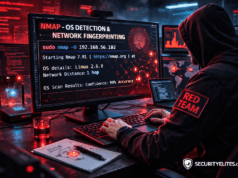
Used for network discovery and port scanning.
Identifies:
- Open ports
- Services
- Operating systems
Real observation:
Beginners run full scans immediately. Professionals start minimal scans first to avoid detection.
🌐 theHarvester
Collects emails, domains, and employee data from public sources.
Useful for:
- Social engineering assessment
- Attack surface mapping
Students often underestimate this tool — yet threat actors rely heavily on exposed employee intelligence.
🧭 Recon-ng
Framework for automated reconnaissance.
Think of it as reconnaissance automation platform integrating OSINT modules.
Enterprise testers use this for structured intelligence gathering.
📡 Netdiscover
Identifies live hosts in local networks.
Extremely useful during internal penetration testing.
🕸️ Nikto
Web server scanner detecting misconfigurations and vulnerabilities.
Important clarification:
Nikto doesn’t exploit — it identifies weaknesses.
⚠️ Mentor Note:
Tools don’t replace methodology.
I’ve seen professionals outperform others using fewer tools — simply because they understood reconnaissance strategy.
🚨 Beginner Mistake Alert
Let me address common failures I repeatedly see while mentoring students.
Mistake 1 — Tool Addiction
Running every Kali tool without understanding output.
Result?
Information overload.
Mistake 2 — Ignoring Passive Recon
Beginners jump straight into scans.
Attackers don’t.
Mistake 3 — Loud Scanning
Aggressive Nmap scans trigger IDS systems instantly.
Mistake 4 — No Documentation
Professionals document findings continuously.
Pentest reports depend on recon accuracy.
Pause here.
Ask yourself:
If you discovered 500 open ports… would you know what matters?
Information gathering is analysis — not collection.
🔥 Pro Tips From 20 Years of Experience
After two decades in cybersecurity environments, here’s what separates professionals:
✅ Always map attack surface before exploitation
✅ Small findings lead to major breaches
✅ Metadata leaks are gold mines
✅ Subdomains hide vulnerabilities
✅ Employees unintentionally expose intelligence
One advanced insight:
Modern attacks increasingly target cloud misconfigurations, discovered during reconnaissance — not exploitation.
Also remember:
Security tools evolve.
Recon methodology does not.
Observation remains timeless.
🛡 Defensive & Ethical Perspective
Information gathering isn’t only for attackers.
Blue teams use identical techniques.
SOC analysts perform reconnaissance to evaluate organizational exposure.
Defensive security teams ask:
- What can outsiders see about us?
- Are sensitive services exposed?
- Is employee data publicly accessible?
Ethical hacking exists to improve defensive security posture.
Always follow:
- Legal authorization
- Scope limitations
- Responsible disclosure
Unauthorized scanning can be illegal.
Ethics define professionals.
✅ Practical Implementation Checklist
If you’re starting today:
- Install Kali Linux safely.
- Choose a legal practice lab.
- Start passive reconnaissance.
- Use theHarvester for OSINT.
- Perform basic Nmap scans.
- Identify live hosts.
- Document findings.
- Analyze service exposure.
- Map attack surface visually.
- Repeat slowly.
Beginner Action Step:
Practice on platforms like intentionally vulnerable labs — never real systems without permission.
Consistency beats complexity.
🎯 Career Insight — Why Recon Skills Get You Hired
Here’s something recruiters rarely say openly.
Most junior candidates know tools.
Few understand methodology.
SOC Analysts, Pentesters, Threat Hunters — all rely heavily on information gathering.
Entry roles benefiting from recon skills:
- Security Analyst
- Vulnerability Analyst
- Junior Pentester
- Threat Intelligence Analyst
When interviewing candidates, I often ask:
“How would you start assessing an unknown network?”
Those who mention reconnaissance stand out immediately.
Because they think like professionals.
🔁 Quick Recap Summary
Let’s reinforce the learning.
Information Gathering in Kali Linux is:
✔ The first phase of ethical hacking
✔ Intelligence collection before exploitation
✔ Attack surface discovery
✔ Foundation of vulnerability assessment
✔ Critical for risk analysis
Key idea:
You don’t attack what you don’t understand.
Professionals observe first.
Then analyze.
Then act.
And interestingly — many engagements succeed entirely because reconnaissance reveals misconfigurations before exploitation becomes necessary.
Master recon… and the rest of cybersecurity becomes easier.
❓ FAQs — Information Gathering Tools in Kali Linux
1. What is information gathering in ethical hacking?
Information gathering is the process of collecting details about a target system before attempting exploitation. It identifies exposed services, technologies, and potential vulnerabilities forming the foundation of cybersecurity assessments.
2. Is Nmap used for hacking?
No. Nmap is a network discovery tool. Ethical hackers use it for authorized vulnerability assessment and security audits. Misuse without permission becomes illegal.
3. What is passive vs active reconnaissance?
Passive reconnaissance collects public information without interacting with systems. Active reconnaissance directly scans systems to identify services and open ports.
4. Can beginners learn Kali Linux reconnaissance easily?
Yes — if learned step-by-step. Focus on understanding outputs rather than memorizing commands. Practical lab practice accelerates learning significantly.
5. Which information gathering tool should beginners start with?
Start with theHarvester for passive recon and Nmap for basic network scanning. These build foundational understanding.
6. Why is reconnaissance important before exploitation?
Because exploitation without intelligence wastes time and increases detection risk. Recon reveals realistic attack paths.