Linux Basics for Ethical Hackers (Complete Beginner’s Practical Guide)
Where Every Ethical Hacker Actually Starts….
Let me tell you something most beginners don’t realize early enough.
Ethical hacking does NOT start with hacking tools.
It starts with Linux.
Almost every real penetration test I’ve conducted — whether against banks, SaaS companies, or enterprise infrastructure — involved Linux systems somewhere in the attack surface. Sometimes as attacker machines. Sometimes as vulnerable servers. Often both.
And here’s the uncomfortable truth…
Many aspiring ethical hackers jump directly into tools like Metasploit or Burp Suite without understanding Linux basics. They copy commands blindly. Things break. Panic starts.
I’ve seen this repeatedly while mentoring students.
They ask:
“Sir, why is my tool not working?”
But the real issue isn’t the tool.
It’s Linux fundamentals.
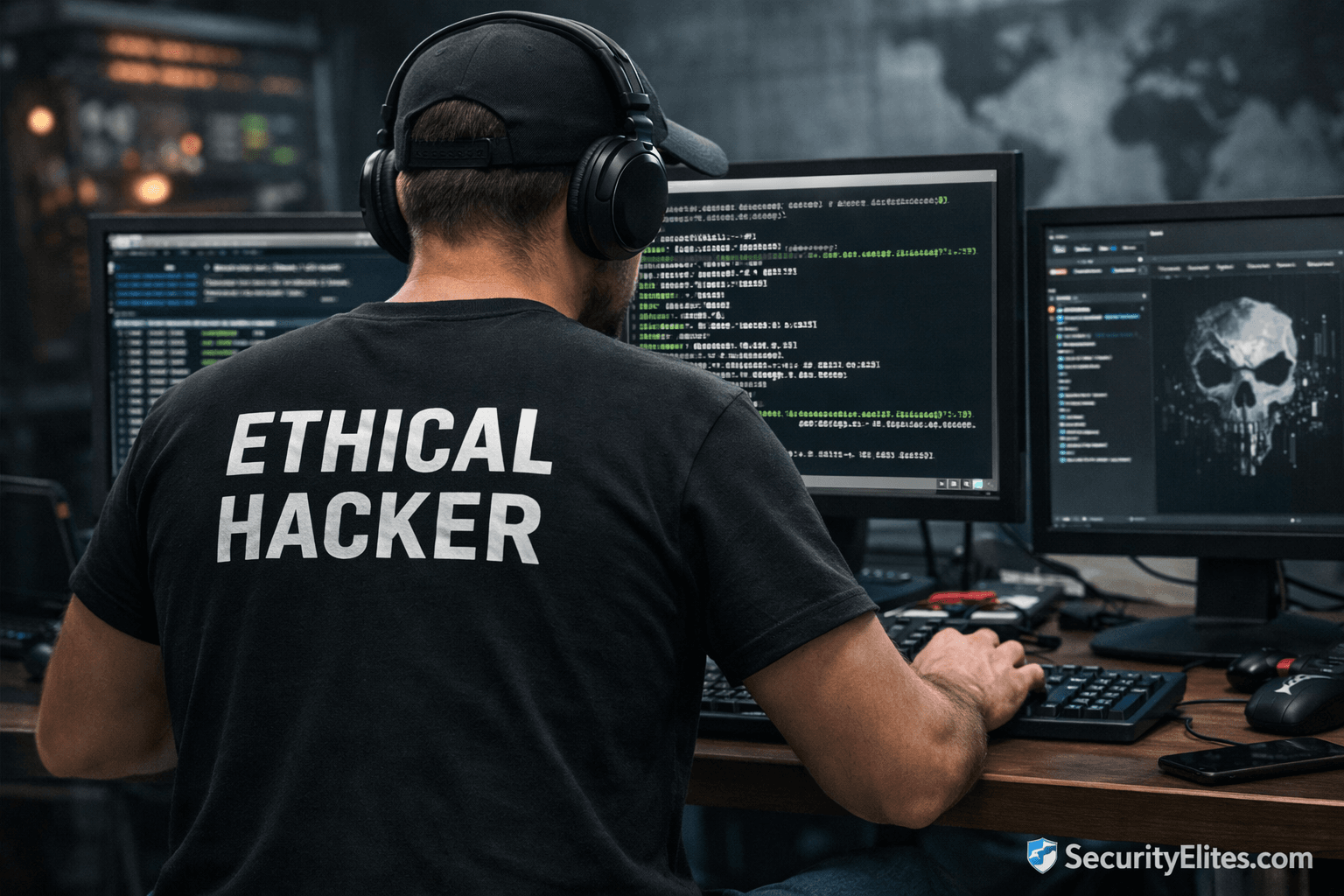
Linux is the operating language of cybersecurity. Ethical hackers think through terminals, permissions, processes, and networking layers — not graphical buttons.
Let’s pause here for a moment.
If Windows feels like driving an automatic car…
Linux is manual transmission.
Hard at first. Powerful forever.
This guide will walk you through Linux the way ethical hackers actually learn it in real environments, not classroom theory.
🔥 Why Linux Matters in Ethical Hacking
From real penetration testing experience — nearly 90% of cybersecurity tooling runs natively on Linux.
Why?
Because Linux gives control.
Control over files.
Control over networks.
Control over processes.
Control over security behavior.
In enterprise security audits, attackers rarely target only Windows machines anymore. Modern infrastructures run:
- Web servers on Linux
- Cloud containers on Linux
- Security appliances on Linux
- DevOps pipelines on Linux
Meaning…
If you don’t understand Linux, you cannot properly perform:
- Vulnerability assessment
- Attack surface analysis
- Privilege escalation
- Threat intelligence collection
Now here’s where beginners get confused.
They think Linux equals coding.
Not true.
Linux is mainly about understanding system behavior.
During one SOC investigation, a junior analyst missed an active intrusion simply because they didn’t recognize abnormal Linux processes running in memory.
The attacker stayed undetected for weeks.
Knowledge gap — not tool failure.
Linux knowledge directly impacts an organization’s security posture.
And ethical hackers must understand systems deeply before attempting exploitation workflows.
🧩 Linux Explained Simply (Beginner Visualization)
Imagine a large office building.
- Rooms = folders
- Files = documents
- Security guards = permissions
- Employees = users
- Manager access = root privileges
Linux manages who can enter which room and do what.
That’s it.
At its core, Linux revolves around three ideas:
1. File System
Everything in Linux is treated as a file.
Even devices.
Even processes.
Yes — even running hardware components appear as files.
Beginners usually struggle here because Windows hides system structure. Linux exposes it.
And exposure equals learning.
2. Terminal (Command Line)
Ethical hackers live inside the terminal.
Why?
Because attacks, automation, and enumeration require speed.
Typing:
ls
cd
pwd
may look simple…
But these commands allow navigation across entire enterprise servers remotely.
Let’s pause again.
Graphical interfaces slow attackers down.
Command-line access scales attacks.
That’s why professionals rely on terminals.
3. Permissions System
Linux security depends heavily on permissions:
- Read
- Write
- Execute
During penetration tests, misconfigured permissions are one of the most common privilege escalation paths.
Students often underestimate this.
Attackers never do.
⚙️ Professional Ethical Hacking Workflow Using Linux
In real-world cybersecurity methodology, Linux supports every phase of an engagement.
Here’s how professionals actually operate.
Step 1 — Reconnaissance
Gather information about targets.
Commands help identify:
- Network interfaces
- DNS details
- Connected systems
Linux allows silent intelligence gathering.
Step 2 — Enumeration
Enumeration means extracting detailed system information.
This phase determines exploitation success.
Typical checks include:
- Users
- Services
- Running ports
- Installed software
From enterprise audits, I can say confidently:
Enumeration failures cause more pentest failures than lack of exploits.
Step 3 — Exploitation
Using vulnerabilities discovered earlier.
Linux enables:
- Script execution
- Payload delivery
- Reverse shells
But exploitation without Linux understanding often crashes systems unintentionally.
And crashing production servers during testing?
That’s a career-ending mistake.
Step 4 — Post Exploitation
Maintaining access and analyzing impact.
Professionals analyze:
- Logs
- Credentials
- Network trust relationships
Linux tools make lateral movement possible.
🧠 Real-World Example
A few years ago during a corporate penetration test, we gained limited access to a Linux web server.
Nothing impressive initially.
Low privileges only.
Most beginners would stop here.
But something interesting happened…
Running a simple permission check revealed a backup script executable by all users.
Inside that script? Hardcoded administrator credentials.
Within minutes, access escalated to root.
No fancy exploit.
Just Linux understanding.
This is why Linux basics outperform tool dependency.
🛠 Tools Ethical Hackers Use on Linux (And Why)
Let’s clarify something.
Tools don’t make hackers successful — understanding does.
Common professional environments include:
Kali Linux
Purpose-built penetration testing OS.
Includes hundreds of tools pre-installed.
Beginner mistake:
Using tools without understanding underlying commands.
Nmap
Network discovery and port scanning.
Helps map attack surface.
Used heavily during vulnerability assessment.
Wireshark
Packet analysis tool.
Helps observe live network traffic.
SOC teams use it for incident response as well.
Bash Shell
Often ignored by beginners.
But automation scripts written in Bash save hours during enterprise testing.
Mentor Note:
Learning Bash increases professional credibility quickly.
🚨 Beginner Mistakes I See Constantly
After training hundreds of learners, patterns repeat.
Mistake 1 — Memorizing Commands
Commands without understanding fail under pressure.
Real environments differ.
Mistake 2 — Ignoring File Permissions
Privilege escalation opportunities get missed.
Mistake 3 — Fear of Terminal Errors
Errors are feedback, not failure.
Professionals troubleshoot continuously.
Mistake 4 — Tool Addiction
Downloading tools instead of learning systems.
Let me be honest.
Enterprise attackers rarely use flashy tools.
They abuse system misconfigurations.
🔥 Pro Tips From 20 Years Experience
Pro Tip #1:
Spend 70% time understanding Linux behavior.
Tools evolve. Fundamentals remain.
Pro Tip #2:
Break your own lab intentionally.
Recovery teaches more than success.
Pro Tip #3:
Learn log locations early.
Incident responders depend on logs.
Pro Tip #4:
Understand processes using:
ps
top
htop
Many malware detections begin here.
🛡 Defensive & Ethical Perspective
Ethical hacking exists to improve defensive security, not bypass it irresponsibly.
Linux knowledge helps defenders:
- Detect abnormal processes
- Identify persistence mechanisms
- Analyze attacker behavior
- Strengthen security posture
Legal reminder from real engagements:
Always practice in:
- Personal labs
- Authorized environments
- Bug bounty scopes
Unauthorized testing equals illegal activity.
Ethics define professionals.
✅ Practical Linux Implementation Checklist
Start here.
- Install Kali Linux or Ubuntu VM
- Learn directory navigation daily
- Practice file creation & permissions
- Understand users & groups
- Monitor running processes
- Learn networking commands
- Write basic Bash scripts
- Break and rebuild systems
- Analyze system logs
- Document learning
Consistency beats intensity.
🎯 Career Insight — Linux Skills in Cybersecurity Roles
Linux knowledge directly supports roles like:
- Ethical Hacker
- SOC Analyst
- Threat Hunter
- Incident Responder
- Red Team Operator
- Security Engineer
Hiring managers often test Linux basics first.
Why?
Because Linux understanding shows technical thinking maturity.
Students who master Linux early transition faster into professional cybersecurity roles.
📌 Quick Recap Summary
Let’s consolidate.
Linux basics enable ethical hackers to:
- Understand attack surfaces
- Perform enumeration effectively
- Execute exploitation safely
- Analyze system behavior
- Improve defensive security
Remember this:
Ethical hacking isn’t breaking systems.
It’s understanding them deeply enough to protect them.
Linux is that foundation.
Master it slowly.
Consistency builds expertise.
❓ FAQs — Linux Basics for Ethical Hackers
1. Do ethical hackers need Linux?
Yes. Most cybersecurity tools and enterprise servers run on Linux. Without Linux knowledge, understanding exploitation workflows becomes extremely difficult.
2. Is Linux difficult for beginners?
Initially yes — mainly because it removes graphical comfort. But structured practice makes it intuitive within weeks.
3. Which Linux distribution should beginners start with?
Kali Linux for ethical hacking labs or Ubuntu for learning fundamentals safely.
4. Do I need programming before learning Linux?
No. Linux basics come first. Programming becomes easier afterward.
5. How long does it take to learn Linux for hacking?
With daily practice, foundational comfort develops within 30–60 days.
6. Can I learn Linux without hacking tools?
Absolutely — and actually recommended early on.
7. What is the most important Linux skill?
Understanding permissions, processes, and networking behavior.