
What is Ethical Hacking? A few years ago, during an enterprise penetration test for a financial organization, their CEO asked me something interesting:
“So… you’re basically a legal hacker?”
I smiled — because that single sentence explains 90% of the confusion beginners have.
Movies show hackers breaking systems in seconds.
Social media shows flashy terminals and green code.
But in reality?
Ethical hacking is structured, legal, methodical security testing designed to prevent cyber attacks before criminals exploit them.
And here’s the truth most beginners don’t hear early enough:
👉 Ethical hacking is less about hacking…
👉 and more about thinking like an attacker to build stronger defense.
If you’re entering cybersecurity, this guide will give you the real industry understanding, not YouTube myths.
What Is Ethical Hacking? (Beginner-Friendly Explanation)
Let me simplify this.
Ethical Hacking is the authorized process of:
- Identifying vulnerabilities
- Testing system weaknesses
- Simulating cyber attacks
- Reporting security risks
- Helping organizations fix them
—all before malicious hackers find them.
Think of it like this:
🏠 A thief checks how to break into houses.
🛡️ An ethical hacker checks how thieves could break in — legally — and locks every door.
That’s the difference.
Ethical Hacker vs Malicious Hacker
| Type | Intent | Legal Status |
|---|---|---|
| Ethical Hacker | Protect systems | Legal |
| Black Hat Hacker | Exploit systems | Illegal |
| Grey Hat Hacker | Mixed motives | Risky |
In professional environments, ethical hackers operate under signed authorization, known as:
✅ Scope of Engagement
✅ Rules of Testing
✅ Legal Permission
Without permission, hacking becomes a crime — even if intentions are good.
Social Media Footprinting Techniques Hackers Use (Complete Ethical Hacker Guide)
Now Here’s Where Most Beginners Get Confused…
They think ethical hacking equals:
- Running tools
- Typing commands
- Using Kali Linux
But in real penetration tests, tools come last.
The real work starts with understanding:
- Attack surface
- Business logic
- Human behavior
- Network architecture
- Security misconfigurations
Ethical hacking is actually a cybersecurity methodology, not a toolset.
Ethical Hacking Methodology (Real Professional Workflow)
From my field experience across enterprise assessments, almost every professional engagement follows this structured workflow.
Step 1️⃣ Reconnaissance — Information Gathering
This phase decides success or failure.
Reconnaissance means collecting intelligence about the target:
- Domains
- IP addresses
- Employees
- Technologies
- Public exposure points
Beginners underestimate this stage.
Professionals spend 40–60% of engagement time here.
Why?
Because attackers rarely break strong systems — they find forgotten doors.
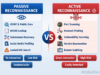
Passive vs Active Reconnaissance – Real Hacker Methods Explained
Step 2️⃣ Scanning & Enumeration
Now we validate what actually exists.
We identify:
- Open ports
- Running services
- Software versions
- Network pathways
This helps map the attack surface.
Example:
An outdated web server version immediately signals potential vulnerabilities.
Step 3️⃣ Vulnerability Assessment
Here we analyze weaknesses such as:
- Misconfigurations
- Weak authentication
- Unpatched software
- Exposure of sensitive data
Important clarification:
✅ Vulnerability Assessment → Finding issues
✅ Penetration Testing → Exploiting safely
Many beginners mix these two.
Step 4️⃣ Exploitation
This is where ethical hackers simulate real attacks.
Examples include:
- Privilege escalation
- Password cracking
- Web exploitation
- Session hijacking
But remember:
Goal = Proof of risk, not destruction.
We demonstrate impact without harming systems.
Step 5️⃣ Post-Exploitation
Now we answer business questions:
- Can attackers access sensitive data?
- Can they move inside networks?
- Can they gain admin control?
This phase reveals true organizational risk.
Step 6️⃣ Reporting (Most Important Phase)
Surprisingly…
Reporting matters more than hacking.
Executives don’t care about exploits — they care about:
- Business impact
- Financial risk
- Data exposure
- Remediation steps
A great ethical hacker is also a great communicator.
🧩 Real-World Scenario (Field Experience)
During one enterprise assessment, we discovered something unexpected.
No firewall bypass.
No zero-day exploit.
Just:
👉 An exposed employee login portal
👉 Without rate limiting
Within minutes, password spraying succeeded.
Result?
Administrative dashboard access.
The organization had invested millions in security tools — yet failed at basic authentication protection.
This happens more often than beginners imagine.
Tools Used by Professional Ethical Hackers (And WHY)
Tools don’t make hackers — understanding does.
But here’s what professionals commonly use.
🔎 Reconnaissance Tools
- Nmap — Network discovery
- theHarvester — Email intelligence
- Maltego — Relationship mapping
WHY?
Because visibility equals opportunity.
🌐 Web Application Testing
- Burp Suite
- OWASP ZAP
Used to intercept and manipulate traffic.
This helps uncover:
- Injection flaws
- Authentication bypass
- Logic vulnerabilities
⚔ Exploitation Frameworks
- Metasploit Framework
Used for controlled exploitation validation.
Professionals rarely “auto exploit.”
They verify risks responsibly.
🔐 Password & Access Testing
- Hydra
- John the Ripper
- Hashcat
Used to test authentication resilience.
🚨 Beginner Mistake Alert
I’ve trained hundreds of students, and these mistakes appear repeatedly:
❌ Jumping directly into tools
❌ Ignoring networking fundamentals
❌ Learning commands without concepts
❌ Practicing illegally
❌ Expecting fast results
This mistake alone causes many cybersecurity careers to stall.
Ethical hacking rewards patience + curiosity, not shortcuts.
SQL Injection Tutorial Step-by-Step (2026 Guide) — Real Ethical Hacker Walkthrough
🔥 Pro Tips From 20 Years of Experience
✅ Think Like an Attacker, Report Like a Consultant
Technical skill gets you access.
Communication builds your career.
✅ Manual Testing Beats Automation
Automated scanners miss business logic flaws.
Humans find real risks.
✅ Learn Systems Before Breaking Them
Understand:
- Operating Systems
- Networking
- Web Architecture
- Cloud Infrastructure
Hackers exploit understanding gaps.
✅ Documentation Is Power
Top ethical hackers maintain personal knowledge bases.
Every engagement teaches patterns.
Ethical Hacking From Defensive Security Perspective
Here’s something important.
Ethical hacking directly strengthens Blue Team defense.
Findings help organizations improve:
- Threat intelligence
- Detection systems
- Incident response
- Security monitoring
Red Team (attack simulation) improves Blue Team readiness.
Security becomes proactive instead of reactive.
Legal & Ethical Responsibility ⚖️
Let me be absolutely clear.
Ethical hacking requires:
✅ Written authorization
✅ Defined testing scope
✅ Responsible disclosure
Testing systems without permission is illegal worldwide.
Professional hackers protect trust — not break it.
✅ Practical Beginner Checklist
If you’re starting ethical hacking today:
Foundation Phase
- Learn Networking basics
- Understand Linux
- Study HTTP/Web concepts
- Learn cybersecurity fundamentals
Practice Phase
- Build home lab
- Use vulnerable machines
- Practice legally
Skill Development
- Learn vulnerability assessment
- Study exploitation workflow
- Write reports
Career Growth
- Participate in Bug Bounty programs
- Build portfolio
- Document findings
⚡ Quick Wins for Beginners
- Start documenting everything you learn
- Focus on ONE domain first (web/network)
- Practice daily small labs
- Read vulnerability reports
- Follow security researchers
Consistency beats talent here.
Quick Recap Summary
✅ Ethical hacking = authorized security testing
✅ Goal is prevention, not damage
✅ Methodology matters more than tools
✅ Reconnaissance decides success
✅ Reporting defines professionalism
✅ Ethics and legality are mandatory
Frequently Asked Questions (FAQs)
1. Is ethical hacking legal?
Yes — when performed with authorization and defined scope.
2. Do ethical hackers need coding skills?
Basic scripting helps, but understanding systems matters more initially.
3. How long does it take to become an ethical hacker?
Typically 6–18 months of consistent practical learning.
4. Is Kali Linux required?
No. Kali Linux is a tool platform, not a skill.
5. Can beginners start ethical hacking without IT background?
Yes, but networking and operating systems must be learned first.
6. What is the difference between penetration testing and ethical hacking?
Penetration testing is a structured engagement under ethical hacking practices.
7. Is ethical hacking a good career in 2026?
Demand continues rising due to expanding cyber threats and digital infrastructure.