

Cyber attacks are increasing at an alarming rate across the world. Every day, hackers launch thousands of cyber attacks targeting individuals, businesses, governments, and critical infrastructure. As technology continues to evolve, cyber criminals are also developing more sophisticated techniques to exploit vulnerabilities and steal sensitive data.
In 2026, cyber attacks are expected to become even more advanced due to the rise of artificial intelligence, automation tools, and increasingly interconnected digital systems. Experts estimate that cybercrime will cost the global economy over $10.5 trillion annually, making it one of the most serious threats in the modern digital era.
From phishing scams and ransomware attacks to zero-day exploits and AI-powered cyber attacks, hackers are constantly finding new ways to compromise systems and access confidential information. Many of these attacks occur silently in the background, meaning victims often do not realize they have been targeted until the damage has already been done.
Understanding how cyber attacks work is one of the most effective ways to protect yourself online. Whether you are an individual user, a business owner, or an IT professional, awareness of the most common cyber attacks can significantly reduce the chances of becoming a victim.
In this comprehensive cybersecurity guide from SecurityElites, you will learn:
- The 17 most common cyber attacks in 2026
- How hackers perform these cyber attacks
- Real-world examples of major cyber threats
- Practical strategies to prevent cyber attacks
By the end of this guide, you will have a clear understanding of the most dangerous cyber attacks affecting the digital world today and how you can defend yourself against them.
If you want to stay safe in an increasingly connected world, understanding these cyber threats is no longer optional — it is essential.
Table of Contents
What Is a Cyber Attack?
A cyber attack is a malicious attempt by hackers to gain unauthorized access to computers, networks, or data.
Cyber attacks target Individuals, Businesses, Governments, Financial institutions, Hospitals, Educational institutions etc.. You can learn complete Cyber Kill Chain to understand how Cyber attack works.
Hackers launch cyber attacks to:
- Steal sensitive data
- Demand ransom payments
- Spy on organizations
- Disrupt services
- Gain financial profit
Cyber attacks can be carried out using malware, social engineering, vulnerabilities, or network exploitation.
Why Cyber Attacks Are Increasing in 2026
In 2026, cyber attacks are becoming more frequent, more sophisticated, and more damaging than ever before. From large corporations to individual users, almost everyone connected to the internet is now a potential target for cyber criminals.
Several key factors are driving the rapid rise of cyber attacks in 2026. Some of them are listed below:
1. Artificial Intelligence Is Being Used by Hackers
Artificial intelligence is transforming the way cyber attacks are performed. Hackers are increasingly using AI-powered tools to automate cyber attacks and identify security weaknesses faster than traditional methods.
AI can help attackers:
- Scan networks for vulnerabilities in seconds
- Generate convincing phishing emails automatically
- Crack passwords using advanced algorithms
- Launch large-scale cyber attacks with minimal effort
Because AI can analyze massive amounts of data quickly, cyber criminals can target thousands of systems simultaneously. This makes AI-powered cyber attacks one of the fastest-growing threats in modern cybersecurity.
2. Rapid Growth of Connected Devices
The number of internet-connected devices is increasing every year, creating more opportunities for cyber attacks.
Today, billions of devices are connected to the internet, including:
- Smartphones
- Smart home devices
- Security cameras
- Smart TVs
- Industrial IoT systems
- Wearable devices
Many of these devices have weak security protections or outdated software, making them easy targets for hackers. Once compromised, these devices can be used to launch cyber attacks or gain access to larger networks.
3. Remote Work and Cloud Systems
The rise of remote work has significantly changed how organizations operate. While remote work provides flexibility and convenience, it also creates new cybersecurity challenges.
Employees often access company systems using:
- Home networks
- Personal devices
- Public Wi-Fi connections
These environments may lack strong security protections, making them attractive targets for cyber attackers. As more organizations rely on cloud services and remote access tools, the risk of cyber attacks continues to grow.
4. Valuable Data on the Internet
Data has become one of the most valuable assets in the digital world. Personal information, financial records, and corporate data can be sold for high prices on the dark web.
Hackers frequently target data such as:
- Login credentials
- Credit card information
- Medical records
- Business secrets
- Customer databases
Because stolen data can generate large profits for cyber criminals, many hackers launch cyber attacks specifically to steal and sell valuable information.
5. Cybercrime Has Become a Massive Industry
Cybercrime is no longer limited to individual hackers working alone. Today, cybercrime operates like a large underground industry with organized groups, sophisticated tools, and global networks.
Many cyber criminals now use Cybercrime-as-a-Service, where attackers can purchase hacking tools, malware kits, or ransomware services from other criminals.
This underground ecosystem allows even inexperienced hackers to launch powerful cyber attacks without needing advanced technical skills.
6. Increasing Software Vulnerabilities
Modern software systems are extremely complex and often contain hidden vulnerabilities. Hackers constantly search for these weaknesses to exploit them before developers release security patches.
When a vulnerability is discovered, attackers may launch cyber attacks such as:
- Zero-day exploits
- Malware infections
- Data breaches
Because thousands of new software vulnerabilities are discovered every year, organizations must constantly update and patch their systems to stay protected.
Understanding why cyber attacks are increasing helps individuals and organizations prepare for modern cyber threats and implement stronger security practices.
In the next section, we will explore the 17 most common cyber attacks in 2026 and how they threaten digital systems worldwide.
17 Most Common Cyber Attacks in 2026
In 2026, hackers are using automation, artificial intelligence, and sophisticated malware to exploit security weaknesses faster than ever before. Understanding the most common cyber attacks is essential for individuals, businesses, and organizations that want to stay protected online.
Below are the 17 most common cyber attacks in 2026, including how they work and how you can prevent them.
1. Phishing Attacks
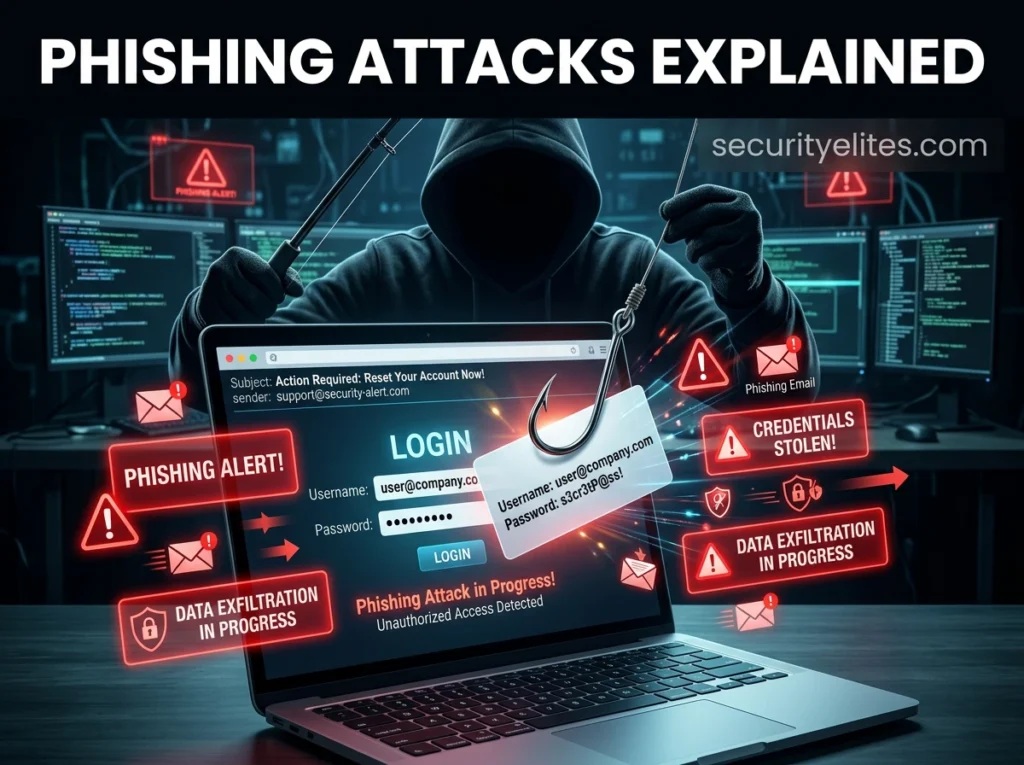
Phishing attacks remain the most common attacks globally, responsible for a large percentage of security breaches.
A phishing attack occurs when hackers impersonate trusted organizations to trick users into revealing sensitive information such as:
- Login credentials
- Credit card details
- Banking information
- Personal data
These attacks usually come in the form of:
- Fraudulent emails
- Fake login pages
- SMS messages (smishing)
- Social media messages
Attackers design phishing messages to look legitimate by copying the branding of trusted companies like banks, online services, or government agencies.
Example of a Phishing Attack
You receive an email claiming your bank account has been suspended. The email asks you to click a link and verify your account details. The link leads to a fake website that steals your credentials.
How to Prevent Phishing Attacks
To protect yourself from phishing cyber attacks:
- Always verify the sender of emails
- Avoid clicking suspicious links
- Use multi-factor authentication
- Install email spam filters
2. Ransomware Attacks

Ransomware attacks are among the most financially damaging cyber attacks in the world. In a ransomware attack, hackers use malware to encrypt the victim’s files and demand a ransom payment to restore access.
Attackers usually demand payment in cryptocurrency, making it difficult for authorities to track them.
If the ransom is not paid, attackers may:
- Permanently delete files
- Leak sensitive data
- Continue attacking the network
Ransomware attacks commonly spread through:
- Malicious email attachments
- Infected downloads
- Exploited vulnerabilities
- Compromised websites
Prevention Tips
- Maintain regular data backups
- Update operating systems and software
- Avoid downloading unknown files
The Cybersecurity and Infrastructure Security Agency provides a detailed ransomware prevention guide to help organizations protect their systems from ransomware attacks.
3. Malware Attacks
Malware attacks involve malicious software designed to damage or infiltrate computer systems.
Malware is one of the most common cyber attack tools used by hackers.
Types of malware include:
- Viruses
- Worms
- Trojans
- Spyware
- Adware
Once malware infects a device, attackers may gain access to sensitive information, monitor activity, or damage files.
Example
A user downloads a free software program that secretly installs spyware. The spyware records keystrokes and sends passwords to hackers.
Prevention Tips
- Install antivirus software
- Avoid untrusted downloads
- Keep software updated
4. Zero-Day Exploits
Zero-day exploits are highly dangerous cyber attacks that target unknown software vulnerabilities.
The term “zero-day” refers to the fact that developers have zero days to fix the vulnerability before attackers exploit it.
These attacks are extremely dangerous because:
- Security tools cannot detect them easily
- There are no available patches
- Attackers can cause significant damage before discovery
Zero-day vulnerabilities often affect:
- Operating systems
- Web browsers
- Enterprise software
- Cloud platforms
5. Man-in-the-Middle Attacks (MITM)
A Man-in-the-Middle attack occurs when an attacker secretly intercepts communication between two parties.
For example, hackers may intercept data between:
- A user and a website
- Two employees communicating within a company
- A customer and an online banking service
The attacker can then steal sensitive information such as:
- Login credentials
- Financial details
- Confidential messages
Man-in-the-middle attacks often occur on:
- Public Wi-Fi networks
- Unsecured websites
- Compromised routers
Prevention Tips
- Use secure HTTPS websites
- Avoid public Wi-Fi for financial transactions
- Use a VPN
6. Distributed Denial-of-Service (DDoS) Attacks
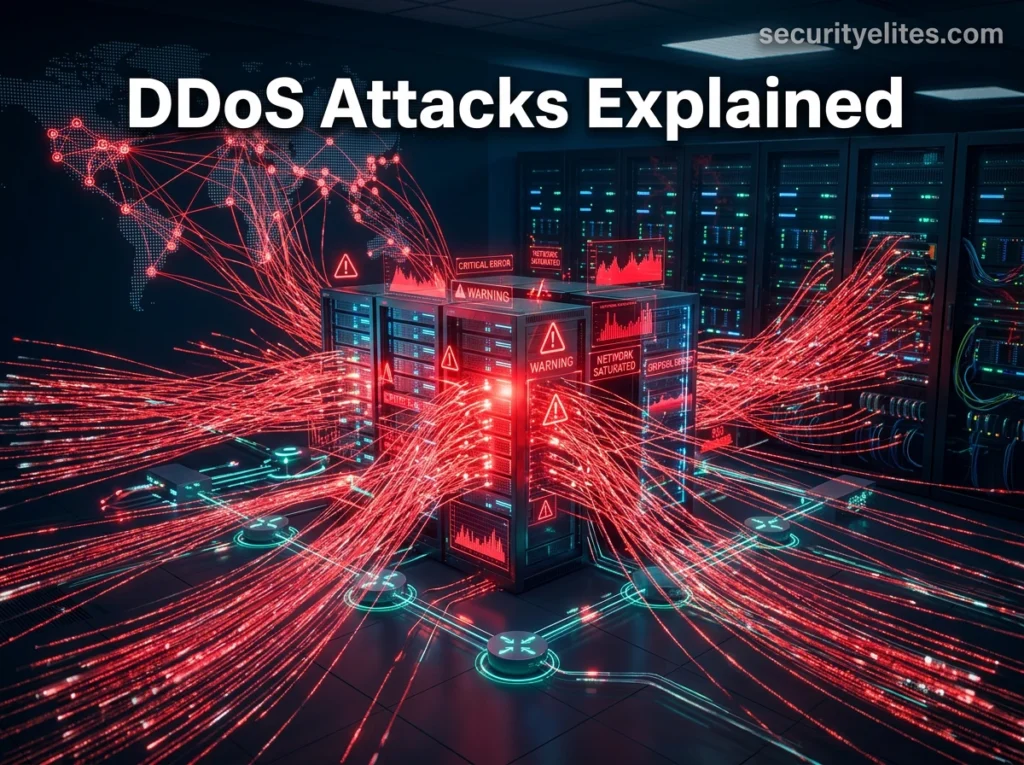
Distributed Denial-of-Service attacks are designed to overwhelm websites or servers with massive traffic.
These attacks use thousands of infected devices called botnets to send requests simultaneously.
When the server becomes overloaded, the website becomes unavailable to legitimate users.
DDoS cyber attacks can cause:
- Website downtime
- Loss of revenue
- Damage to brand reputation
- Service disruption
Large companies, banks, and government websites are frequent targets.
7. SQL Injection Attacks
SQL injection is one of the most dangerous attacks targeting web applications.
In this attack, hackers inject malicious SQL commands into input fields such as:
- Login forms
- Search boxes
- Website URLs
This allows attackers to access the backend database of a website.
With SQL injection, attackers can:
- Steal user data
- Modify records
- Delete entire databases
- Gain administrative access
Prevention Tips
Developers should use:
- Parameterized queries
- Input validation
- Secure coding practices
8. Cross-Site Scripting (XSS)
Cross-Site Scripting attacks occur when attackers inject malicious scripts into websites.
When users visit the compromised page, the malicious code executes in their browser.
These attacks can:
- Steal session cookies
- Redirect users to malicious websites
- Capture personal information
XSS attacks often target forums, comment sections, and poorly secured websites.
9. Password Attacks
Password attacks attempt to gain access to accounts by cracking passwords.
Hackers use automated tools to attempt millions of password combinations.
Common password attack techniques include:
- Brute force attacks
- Dictionary attacks
- Credential stuffing
Weak passwords significantly increase the risk of successful cyber attacks.
Prevention Tips
- Use long and complex passwords
- Enable multi-factor authentication
- Use password managers
10. Social Engineering Attacks
Social engineering attacks manipulate human psychology instead of exploiting software vulnerabilities.
Attackers trick victims into revealing confidential information by pretending to be trusted individuals.
Common social engineering tactics include:
- Fake customer support calls
- Fraudulent emails
- Impersonation scams
Since these attacks rely on human mistakes, even highly secure systems can be compromised.
11. Insider Threat Attacks
Insider threats occur when employees or trusted individuals misuse their access to sensitive systems.
These attacks can be intentional or accidental.
Examples include:
- Employees stealing confidential data
- Staff sharing passwords
- Negligent handling of sensitive information
Organizations must monitor internal activity to reduce insider threats.
12. Supply Chain Attacks
Supply chain cyber attacks target trusted vendors or software providers. Hackers infiltrate a supplier’s system and distribute malicious software through legitimate updates.
Because the software appears trustworthy, many organizations install it without suspicion.
Supply chain attacks can compromise thousands of organizations simultaneously.
13. IoT Attacks
Internet of Things devices such as smart cameras, smart TVs, and home assistants often have weak security.
Hackers exploit vulnerabilities in these devices to:
- Access home networks
- Spy on users
- Launch large botnet attacks
Many IoT devices ship with default passwords, making them easy targets for cyber attacks.
14. AI-Powered Attacks

Artificial intelligence is transforming both cybersecurity and cybercrime. Hackers now use AI to automate attacks and identify vulnerabilities faster.
AI-powered attacks can:
- Generate realistic phishing emails
- Crack passwords quickly
- Scan networks for weaknesses
These attacks are extremely scalable and difficult to detect.
15. Credential Stuffing Attacks
Credential stuffing attacks use stolen login credentials from previous data breaches. Hackers test these credentials across multiple websites because many users reuse passwords.
If the same password works on multiple accounts, attackers gain access quickly.
Credential stuffing is responsible for many large account takeovers.
16. Drive-By Download Attacks
Drive-by download cyber attacks occur when malware automatically downloads from a compromised website. Users may become infected simply by visiting the page.
Attackers exploit vulnerabilities in:
- Web browsers
- Plugins
- Outdated software
These attacks require no user interaction, making them particularly dangerous.
17. Fileless Malware Attacks
Fileless malware is one of the most advanced cyber attacks used by hackers today. Unlike traditional malware, fileless malware does not install files on the system.
Instead, it runs directly in memory using legitimate system tools such as:
- PowerShell
- Windows Management Instrumentation
- System processes
Because no files are written to disk, traditional antivirus software often fails to detect fileless cyber attacks.
Fileless malware cyber attacks are dangerous because they:
- Leave minimal traces
- Bypass traditional antivirus tools
- Operate stealthily in system memory
- Spread quickly across networks
Prevention Tips
Organizations can reduce the risk by:
- Monitoring system behavior
- Implementing endpoint detection systems
- Restricting PowerShell usage
Frequently Asked Questions (FAQs)
What are cyber attacks?
Cyber attacks are malicious attempts by hackers to gain unauthorized access to computers, networks, or digital systems. These attacks are designed to steal sensitive information, disrupt services, damage systems, or demand ransom payments. Common cyber attacks include phishing attacks, ransomware attacks, malware infections, and distributed denial-of-service (DDoS) attacks.
What are the most common cyber attacks in 2026?
The most common attacks in 2026 include phishing attacks, ransomware attacks, malware infections, zero-day exploits, man-in-the-middle attacks, distributed denial-of-service (DDoS) attacks, SQL injection attacks, cross-site scripting attacks, password attacks, and AI-powered cyber attacks. These cyber threats target individuals, businesses, and organizations worldwide.
Who is most at risk of cyber attacks?
Anyone who uses the internet can become a target of cyber attacks. However, businesses, financial institutions, healthcare organizations, government agencies, and small businesses are often primary targets because they store large amounts of sensitive data.
What is the most dangerous type of cyber attack?
Ransomware attacks are considered one of the most dangerous cyber attacks because they can lock critical systems, encrypt valuable data, and demand large ransom payments. These attacks can cause severe financial losses and operational disruptions.
How do hackers perform cyber attacks?
Hackers perform attacks using various techniques such as phishing emails, malicious software, exploiting software vulnerabilities, brute-force password attacks, and social engineering scams. Many attackers combine multiple techniques to successfully compromise systems.
How can individuals prevent cyber attacks?
Individuals can reduce the risk of attacks by following basic cybersecurity practices such as using strong passwords, enabling two-factor authentication, keeping software updated, avoiding suspicious links, and installing trusted antivirus software.
How can businesses protect themselves from such attacks?
Businesses can protect themselves from attacks by implementing strong cybersecurity policies, training employees about phishing scams, regularly updating systems, using network monitoring tools, and maintaining secure data backups.
Key Takeaways
Cyber attacks are evolving rapidly, and hackers are constantly developing new techniques to exploit vulnerabilities.
Understanding these 17 most common cyber attacks in 2026 can help individuals and organizations stay prepared and implement stronger cybersecurity defenses.
The best protection against cyber attacks is a combination of:
- Awareness
- Security tools
- Safe online behavior